
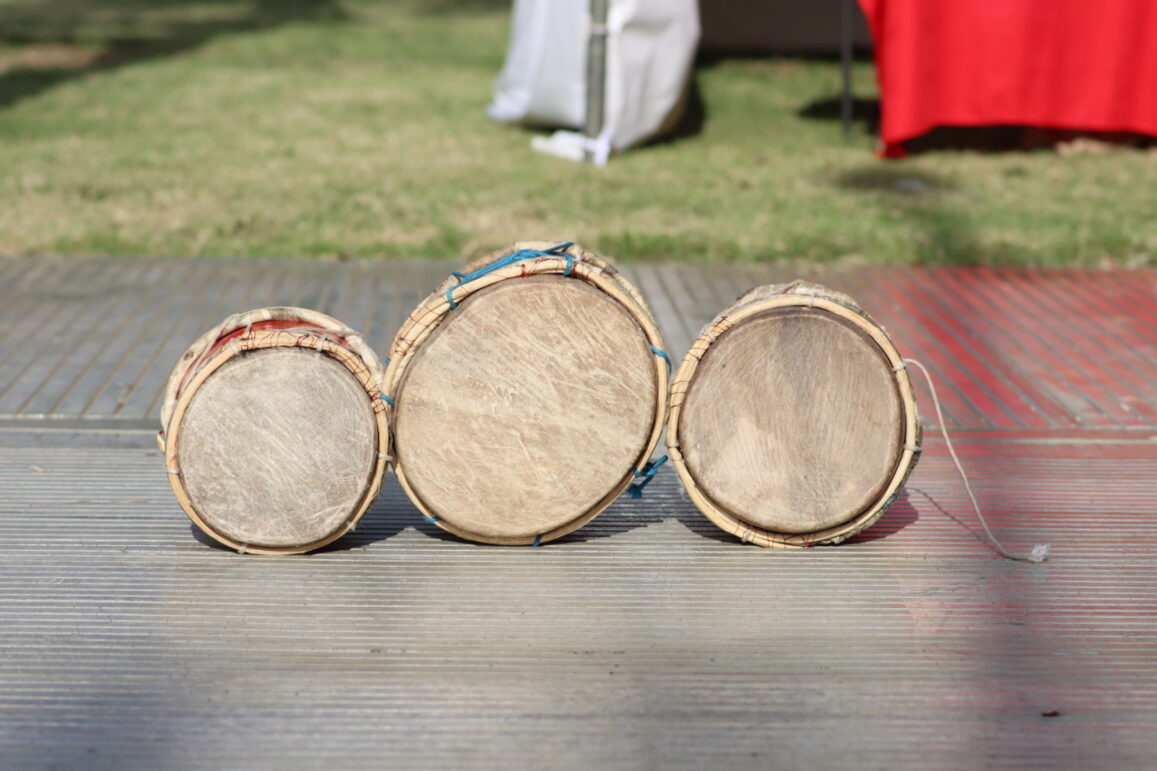
Atabales: The Sacred Drums of the Dominican Spirit
The sound of the atabales is more than rhythm—it is memory, ancestry, and spirituality. In the Dominican Republic, these traditional drums are at the heart of Afro-Dominican religious practices, folkloric celebrations, and community gatherings. Their deep resonance connects people not only to music but also to history and identity.
Origins and Ancestry
The word atabal comes from Arabic and Spanish influences, but in the Dominican context it refers to the family of Afro-Dominican hand drums used primarily in palos ceremonies. Their roots trace back to West and Central Africa, carried across the Atlantic by enslaved Africans who preserved their rhythms as a way of keeping culture alive in a new land. Over centuries, these drums blended with Indigenous Taíno and European Catholic traditions, giving rise to a uniquely Dominican spiritual and musical form.
The Drum Itself
Atabales are cylindrical drums, often crafted from hollowed-out tree trunks and covered with animal skin, usually goat hide. They vary in size, each producing a distinct tone. Traditionally, they are played in groups of three or more, with one drum marking the pulse, another weaving improvisations, and others layering supporting rhythms. This call-and-response interplay reflects the collective essence of Afro-Dominican music.
Atabales in Rituals
These drums are essential in fiestas de palos—religious gatherings held in honor of saints and spiritual entities. The drumming invokes a sacred atmosphere, inviting participants into states of trance, prayer, and celebration. In the Cofradía del Espíritu Santo of Villa Mella, for instance, the atabales are used to maintain centuries-old rituals recognized by UNESCO as Intangible Cultural Heritage of Humanity.
Cultural Resistance and Continuity
During colonial times, African-derived music was often suppressed by authorities, who feared the gatherings it inspired. Yet, communities preserved their traditions in secret. The survival of atabales is a testament to cultural resilience. Today, they are celebrated not only in religious contexts but also on stage, in cultural festivals, and in contemporary music, bridging the sacred and the secular.
Modern Echoes
Artists and folkloric groups continue to highlight the atabales as a symbol of Dominican identity. Their rhythms appear in fusion genres, from merengue típico to experimental jazz, showing how ancient traditions continue to evolve. For many Dominicans, the sound of the atabal remains an ancestral heartbeat—reminding them of where they come from, and carrying forward the voices of those who came before.
The atabales are not just instruments; they are living vessels of memory, faith, and celebration—drums that keep the Dominican soul alive.
Leave a Reply